“Life ... is a tale
Told by an idiot, full of sound and fury,
Signifying nothing.”
-William Shakespeare- Macbeth-


Told by an idiot, full of sound and fury,
Signifying nothing.”
-William Shakespeare- Macbeth-
This play, written by William Shakespeare, father of English, in 1606 (aprox.), tells the story about a man named Macbeth, controlled by his wife: Lady Macbeth, who murdered the king, just after it is said that maybe Macbeth could be the next king of Cawdor; this is followed by development of guilty in Macbeth that ended with other murders based in the feeling of "Maybe he saw me?".
In first place, to understand this play, we can read it in English, the "modern" version and erase all those words that we do not know , so we can do this report and live happily ever after... Not, if you wanted to do that, you should watch "The Simpsons" parody and that's it. Because this play is one of the most well-known and one of the most played plays around the world, and we , as people who like to read, can grow up our vocabulary, look for what the author tried to say, and as simply as we do, read it outloud in class hear the rithm that it follows, that at the same time gives us the atmosphere of the scene; we can understand the whole play, with this little characteristic.
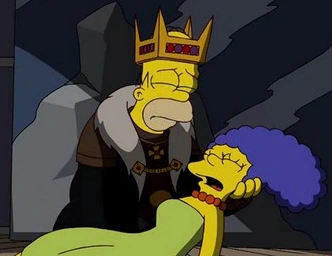
Just after your read the scenes, acts, or any way you read it, I recomend you one thing, read it outloud, this way you can imagine the way the actors could play this, and even understand somethings that you didn't, also, as this play might be in "old English" dont worry if you read it 10 times and untill the 11th you understand it, because this is no easy exercise and no matter how many times you do it, the thing is that you understand it.

When you finally understand it, you can get into many conclusions, and they might vary as you read the play and look for the context. For example, the theme in this story, in the first act, shows a man who is strong, corageous, and fair; in this part we can think that the play would be about a "Manly man" that would become the best king , but in the second act, we meet Lady Macbeth, who is a woman that can control her husband so that she does whatever she wants, without getting her hands "dirty", and we can think that the play is about a "Manly man" that is controlled by his wife. Finally, almost at the end we discover that Macbeth is becoming mad, because he killed the King, so the theme would be " Madness generated by the guilt of a Manly Man controlled by his wife"; I know a bit longer, but as I have not finished reading it, I cannot get to a real or possible theme, and also, as the characters develop, I can create other themes; for example "Lady Macbeth's sides, and the consequences of what do they generate"
To finish the exercise of reading this kind of books and stories, you can reaaly think about what you like and dislike about it. In my case, I love theatre and to read play, but I do not like to read them in a group without really playing it, even thought that we do not know what it is about, I think that it gives it dinamism, movement, and you can really follow the play. Also I love the way in which Shakespeare ends each act, with something that mantains me there, waiting for more, and the way he uses metaphores to tell us the truth, to tell us what is really happening or what will happen in the next scene or act, but if we do not analize it, we stay there, just to discover what we know.

In conclusion, I love to read this author, he is one of my favourites, and this play is also in my "Top five" from him, not only because he uses the rithm in a way in which you understand him without even know many of the words he uses , but because in this play he wrote about the woman as someone who is as strong as a man, but because of the time that it is placed, she cannot be someone well recognized, and no matter what, she is strong and does whatever she wants, because who will suspect from a woman? As last point, two curious facts from this play, when it is played , is that involves the bad luck in it; the origin of the belief that it’s unlucky to say “Macbeth” in a theatre is unclear. Some blame early disasters in performances, or "accidents" that the actors suffer just before the play starts, and also If you do say “Macbeth” in a theatre, you are meant to walk three times
in a circle anti-clockwise, then say a rude word or spit.
Good luck
Poison Rain

No hay comentarios:
Publicar un comentario